
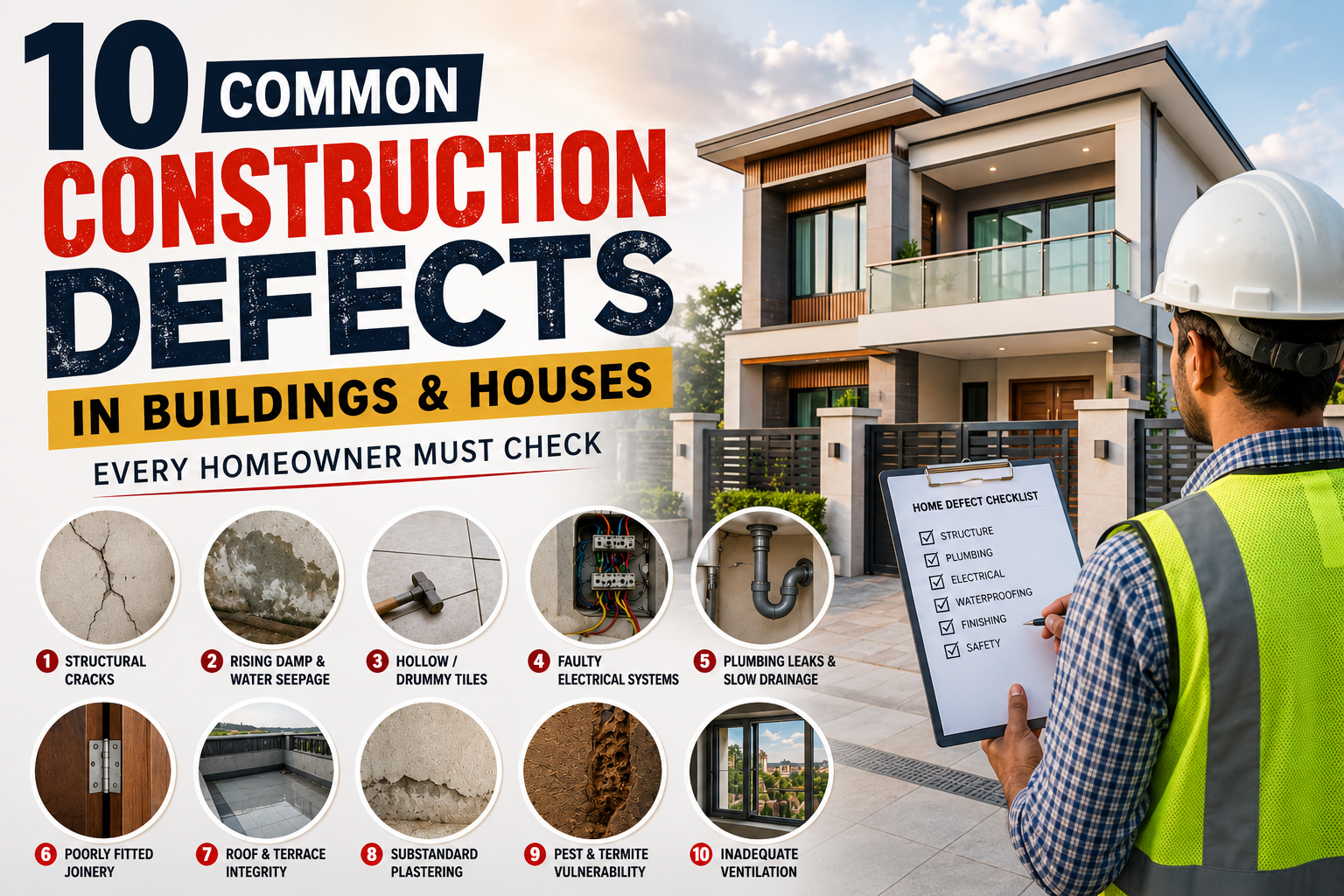
Your home is likely the biggest investment of your life. But beneath the fresh paint and polished marble, hidden building defects could be silently devaluing your property. Whether you are hiring residential construction companies or buying a ready-to-move-in house, a meticulous building defect inspection is your only line of defense.
At GharEka, we believe quality is non-negotiable. Use this essential house defect list to ensure your sanctuary is built on a foundation of excellence, not excuses.
Check Out: Planning Your Dream Home? Here’s How to Choose the Right House Contractor and House Plan
The Essential House Defect List: A Deeper Look
1. Structural & Foundation Cracks
Structural integrity is the backbone of your home. While hairline cracks on the surface are often cosmetic, large, diagonal cracks or those wider than 2mm are red flags. These often indicate “differential settlement,” where one part of the house sinks faster than another due to poor soil testing or inadequate foundation depth.
- GharEka Tip: Check the exterior corners of the building and areas above door frames, as these are the first spots to show structural stress.
2. Rising Damp & Water Seepage
Water is a building’s silent destroyer. Rising damp occurs when moisture from the ground travels upward through porous bricks via capillary action. Look for “efflorescence”—that white, salty powder on the surface – or peeling paint near the floorboards. This usually suggests a failed or bypassed Damp Proof Course (DPC).
- GharEka Tip: Use your hand to feel the wall; if it feels significantly colder or “mushy” to the touch, there is active seepage behind the plaster.
3. Hollow or “Drummy” Tiles
When tiles aren’t bonded correctly to the cement screed, air pockets form underneath. This is often caused by the “dot and dab” method rather than full-bed troweling. If you tap the floor and hear a hollow, drum-like sound, those tiles are “drummy.”
- The Risk: These tiles lack the support to handle the “point load” of heavy furniture (like a wardrobe or piano), making them highly prone to cracking or “popping” during temperature changes.
4. Faulty Electrical Systems
Electrical defects in construction are the leading cause of residential fires. A thorough building defect inspection must verify that the Earth Leakage Circuit Breaker (ELCB) actually trips when tested.
- What to look for: Check for undersized wiring (which overheats under load), a lack of proper grounding, and messy distribution boards where wires are crowded or loosely connected.
5. Plumbing Leaks & Slow Drainage
Plumbing issues are often hidden behind walls or under floors. Check the “trap” under sinks for slow drips and ensure that the floor slope in bathrooms is aggressive enough.
- The Risk: Poorly sloped floors lead to stagnant water, which eventually eats through the tile grout and causes seepage into the ceiling of the room below.
6. Poorly Fitted Joinery (Doors & Windows)
Joinery defects are usually a sign of rushed workmanship. If doors stick, don’t latch, or have uneven gaps (margins) between the door and the frame, the house may have settled unevenly, or the timber used was not seasoned correctly.
- GharEka Tip: Open a door halfway; if it swings shut or open on its own, the frame is not “plumb” (perfectly vertical).
7. Roof & Terrace Integrity
The terrace is the most exposed part of your home. A leaking roof is rarely a simple fix; it often requires stripping layers of flooring to reach the waterproofing membrane. Ensure that _khurra (rainwater outlets) are the lowest point of the terrace and that the waterproofing extends at least 6 inches up the side walls (parapet).
8. Substandard Wall Plastering
Plastering defects, known as undulations, are often masked by high-gloss paint. However, under night lighting, these bumps create unsightly shadows.
- The Test: Hold a powerful flashlight or mobile torch parallel to the wall surface in a dark room. This “grazing light” will highlight every ripple, patch, and poor joint in the plastering work.
9. Pest & Termite Vulnerability
Termites can compromise the structural timber of a home within months. During your building defects inspection, look for “mud tubes” on foundation walls or tiny holes in wooden skirting boards.
- The Standard: Top residential construction companies should provide a 10-year warranty for pre-construction anti-termite treatment, which involves treating the soil before the floor slab is poured.
10. Inadequate Ventilation
Poor ventilation creates a “sick building” syndrome. Without proper cross-ventilation, humidity builds up, leading to black mold in the corners of wardrobes and “sweating” on windows.
- The Fix: Ensure that bathrooms and kitchens have dedicated exhaust points and that window placements allow for a natural breeze to flush out stale air daily.
Checklist for Homeowners
| Category | Key Inspection Point | Risk Level |
| Structural | Foundation cracks / Beam alignment | High |
| Services | Electrical earthing / Pipe pressure | High |
| Aesthetics | Tile hollowness / Wall finish | Medium |
| External | Terrace slope / External paint | Medium |
Conclusion
A home is more than just four walls; it is a legacy. Identifying building defects early doesn’t just save you money – it ensures the safety and longevity of your family’s future. When you choose GharEka, you aren’t just getting a contractor; you’re getting a partner committed to a zero-defect philosophy. Don’t settle for “good enough” when it comes to your dream home.
FAQ:
1. When is the best time to check for defects in construction?
The most critical times are during the “snagging” phase (just before handover) and at key milestones like foundation laying, slab casting, and plumbing installation.
2. How long do residential construction companies typically warrant their work?
Standard industry warranties usually cover structural defects for 5 to 10 years and finishing/plumbing issues for 12 months.
3. What should I do if I find a defect after I have already moved in?
First, document the defect with high-resolution photos and a timestamp. Check your contract’s Defects Liability Period (DLP) clause. If you are within that window, your construction partner is legally obligated to repair the issue at no cost to you.